
I have a Tanfoglio Titan II in .32 ACP.
This nickel-plated, single-action, open-top slide pistol is a hefty thing. This resembles a Beretta Model 70 and can fit in a Walther PP holster.
https://www.youtube.com/watch?v=nPIS4_DPxJo

|
   
|
|


Willy Snyder
PO Box 2732
Pocatello, ID 83206



I have a Tanfoglio Titan II in .32 ACP.
This nickel-plated, single-action, open-top slide pistol is a hefty thing. This resembles a Beretta Model 70 and can fit in a Walther PP holster.
https://www.youtube.com/watch?v=nPIS4_DPxJo
"Faster than a speeding insult, more powerful than an ulterior motive, able to leap to conclusions in a single bound... it's Captain Obvious!
"Living well is the best revenge" - George Herbert.
"Fast is fine, but accuracy is final". - Wyatt Earp



These were inexpensive guns, usually retailing for a fourth the cost of an Interarms Walther PPK or Mauser HSc back in the 70's and 80's.
Despite that, the finish is surprisingly good, the bluing is a deep blue black and evenly applied, there are few visible machine marks and the corners and flats are square and even, with no wavy marks or depressions. They saved money on the triggers though. Mine is gritty and heavy, with a very stout hammer spring and an 8-ish pound trigger. On the plus side, I was able to finish off the last of my Servicios Adventuras primed 380 ammo with it. It has functioned thus far without offense. Though I have not run any hollowpoint ammo through it. It has run without complaint with PMC, Winchester White box, and some handloads with FMJ's and some cast Lyman 356-242, 92-ish grain, RN lead.
I hope to get this out to the range along with my Ortgies come Wednesday and run it through my modified NH qualification course.
Last edited by rintinglen; 05-04-2026 at 11:37 AM.
_________________________________________________It's not that I can't spell: it is that I can't type.
Well I had some problems, I left the Tanfoglio in the case at home, so it's turn will come another day, but I ran into some trouble with my Ortgies. The safety was not latching without severe pressure. I took it down when I got home, took off the grips and gave it a bath in my HF vibratory cleaner. Dried it thoroughly with a heat gun and then lubed it up with some CLP. It seems to be working ok now.
On an aside, I saw an article on John Dillinger where in it said that during one of his arrests he had an Ortgies in his possession. This is not surprising as it is a small flat concealable gun that was widely distributed, inexpensive and reliable.
_________________________________________________It's not that I can't spell: it is that I can't type.
Back around 120 odd years ago, the name Arizmendi meant revolvers, at least in the Eibar and Guernica areas of Spain. Firearms makers of that name were plentiful. There was a Leon Arizmendi, an Isidro Arizmendi (and his sons), yet another one in Arizmendi Y Zulaica y cia, another one in the firm Eschave Y Arizmendi, yet another named Norberto but I am not interested at this moment in any of those Arizmendis. The one I am interested was the co-founder of the firm, Arizmendi Y Goenega y cia, Francisco.
Now as near as I can tell, Francisco was born about the time of the American Civil War in the Eibar area of Spain. I could find no information on him prior to his joining with Mr. Goenega to form a manufacturing concern to manufacture small revolvers of the Velo Dog type in 1886. They continued to exclusively make revolvers up until about 1908 or 1910. The booming market for small auto pistols caught their attention and they began making a series of pirated copies of FN 1903 and 1905 pistols in 7.65 and 6.35. The firm seems to have prospered, because they were making a reported 35 guns a day by 1912, which was respectable for a smallish concern at that time. In 1914, Mr. Goenega, left the firm, though whether he retired, died, or was kidnapped by aliens, I can't say. But the company was renamed Francisco Arizmendi Y cia, and continued to grow. The out break of WW I found them to be one of the larger concerns in the Eibar area, which turned out to be very advantageous, because soon France was knocking on the door, clamoring for pistols.
Why France was having to outsource pistol procurement is a lesson in human failure at predicting the future. Back in the 1890's, France had adopted the Modele 1892 8 MM Ordnance Revolver, and they immediately set about producing enough guns and parts to last "20 Years." By 1896 they had met their goals so they then converted the machinery to making other weapons. However, in 1896, nobody foresaw how large and intensively destructive World War One would be. Just a few months into the war it became clear that the rosy estimates of La Belle Epoch were woefully inadequate. At the same time, France's arsenals were straining to the utmost to provide rifles and machine guns to arm the huge numbers of reservists and conscripts being called to arms. There was no spare manufacturing capacity to divert to making pistols, even if the tooling had been still around to make them, Consequently, France knew they would have to look elsewhere. They did look across the ocean where they bought some 40,000 thousand Savage 1907 32 autos, along with 24,000 Colt 1903's for issue to Allied Belgian Troops. But they did not have to look that far to find manufacturers willing to produce pistols for them and for a lot less.
I have previously read that Savage got 12.70 each for the 1907, or roughly 63 francs. I don't know if that price included extra magazines or not. A document I saw on a French website shows that the Ruby pistols were purchased for 30 francs, with magazines! And there was no danger of an Imperial German submarine sinking these dearly acquired and desperately needed pistols as they made their way on the coastal railway to Bayonne, either.
Just across the Pyrenees, less than 60 miles from Bayonne lies the Basque City of Eibar, which was home to a thriving community of small firearms manufacturers. Gabilondo Y Urresti Y cia. contracted to provide Ruby pattern pistols to the tune of 10,000 a month. IIRC, they had 12 employees at the time. They had to subcontract to everybody who had a file, hammer and a lathe. Initially, they took whatever they could purchase from existing stocks, which is where this one comes in. Among their earlier subcontractors was the firm of Francisco Arizmendi Y cia.
They had been making pseudo-1903 pistols for a couple of years, possibly as early as 1908, but especially the "1912 Walman Patent" pistols (here after WPP). They made a 25 caliber version that looks like a Colt 1908, but no grip safety, and a larger, "duty caliber" pocket pistol version. And that is what I recently acquired. In profile, one could be excused for mistaking it for a Colt 1903, but internally, not so much.
The WPP guns, while resembling in outline the FN/Colt 1903 pistols, were in fact quite different. The take down in particular is noticeably different, and I may say better than the 1903. More about that later. The WPP is a striker fired, blow-back, single action pistol having a 7 shot magazine, a frame mounted safety at the rear of the gun and an internal magazine safety. It is almost exactly 6 inches long, just a hair over 4 inches tall, and mine is just over an inch thick, thanks to home made, wooden aftermarket grips. I believe the original grips were Bakelite, gutta percha, or some similar early plastic, and probably about an 1/8th of an inch thinner. It is surprisingly heavy, weighing 24 ounces, right on the button while empty. It has a bowl shaped divot on top the slide where a small pin is supposed to protrude if a cartridge is in the chamber, but that is missing from mine. This gun has no sight worthy of the name, merely a gutter, absent even the faint pretense of a front sight the Browning 1910 has. Like the more common Ruby pattern Pistols, it has a lanyard ring at the rear of the bottom of the grip. The trigger pull on mine is very heavy. I'm estimating it in the 10-12 pound range, perhaps even higher.. As per contract, the pistols were originally delivered with 3 magazines. As per the usual case, mine has only one and I believe it is an aftermarket.
Disassembly is easier than on the Browning 1903 design. Clear the weapon, insure the chamber is empty. Insert a magazine, and dry-fire the pistol. Remove the magazine. On the right side of the pistol is a checkered button, right above the trigger, Push it down until it stops. The slide will pull off to the front. If you don't release the striker it will launch as the slide goes forward. Once the slide is clear of the frame, remove the recoil spring guide and recoil spring, and the striker, striker spring and striker spring guide will fall out to the rear. The barrel will drop down and may be pulled out to the rear once the slide is put in an upright position. It is very quick and easy to do, if not to type.
Last edited by rintinglen; 05-22-2026 at 03:35 PM. Reason: added info and corrected typo.
_________________________________________________It's not that I can't spell: it is that I can't type.


That sentence got a chuckle and a thought that "most things are" from me.Disassembly is easier than on the browning 1903 design.
As much as I like shooting my Colt Model 1903, I do not like field stripping it for cleaning.
Robert
When you first pick up the WPP, you will swiftly notice the lack of sharp edges. Except for the edges of the Takedown Button and Safety Lever, there are no sharp edges. It is a very compact design, in fact, I can only get 2 fingers on the grip-frame, despite the 7 round capacity. If I hold it in my left hand, the lanyard ring is slightly distracting. Not particularly painful, but sort of odd feeling, like something that's there but shouldn't be. The safety resembles that of the Walther Model 4, only backwards. It rotates about 185 º from "Safe" to "Fire," because when on safe, the lever rides above the slide/frame junction to block the slide and prevent it from being retracted. The only marking is a Letter "F" that is exposed when the safety is rotated to the rear. There's no way to swiftly operate the safety one handed, at least, no way to take the weapon off "Safe" quickly. For a lefty, you'd be totally screwed, you'd absolutely have to completely relinquish your hold on the grip, then fumble the safety, I dare say you could just about time it with a calendar.
While inspecting this pistol I came across evidence of the chief complaint voiced about Spanish firearms of the pre-war era--soft steel. This gun does not seem to have been fired much, yet the ledge on the barrel that locks onto the takedown latch shows peening and the take down latch itself seems to have been twisted a bit. I don't think I'll be shooting this one much.
Last edited by rintinglen; 05-22-2026 at 02:40 PM.
_________________________________________________It's not that I can't spell: it is that I can't type.


Neither of my grandfathers were really "gun guys", though one was a pretty serious hunter, but both of them did have pocket pistols/handguns. Dad's dad was a county jailer for 32 years and was never without his nickel S&W Bodyguard .38 Special. Sadly, it disappeared after he passed. We suspected an uncle by marriage (also now deceased) who offered to help "clean up" the house after Papaw died. My other grandpa had a little pre-GCA German made Wischo .25 Auto that he carried when working on his farm. Fortunately, I do have that one, along with the box of Remington ammo that I presume he bought with the gun. The box of ammo has six rounds missing and a price tag of $3.99, probably not much less than what the pistol cost!
My favorite pocket pals for house and yard carry are my 1970's Charter Arms Undercover .38 Special and Ruger LCP II .22 LR. So I guess those will have the title of "Grandpa's pocket pistols" some day!
Currently casting and loading: .32 Auto, .380 Auto, .38 Special, 9X19, .357 Magnum, .257 Roberts, 6.5 Creedmoor, .30 WCF, .308 WCF, .45-70.
Would love to see you try a Zastava M70 32 acp. Button mag release, last round hold open, thumb safety. The 1903 Colt hammer fixed. Does have a mag safety, ah well.
@ Drydock--I should have bought one when they were on sale for 199. Nobody had spare mags then, though.
the CZ50 and CZ70 are also interesting.
_________________________________________________It's not that I can't spell: it is that I can't type.
Yep, that's what I paid for mine. Got 2 mags and a holster with it. All my 1911 habits translate. Just have to remember to rake the partially ejected mag out before going for the new one.
Fwiw there's a guy over on GB selling them for $225. AIM still gets them in at $240.
I'm a bit saddened that I did not win this one. I had bid what I could afford, but somebody else wanted it more. Still, it is an interesting gun, though I will probably never shoot one, there weren't very many made. Let me tell you what I have found, which isn't much.
In the years immediately following the First World War, there was a a surprising demand for pocket pistols in Germany. Actually, when you consider the rampant conflict between the various socialist, communist, and right wing groups, it really is no surprise that a small pocket pistol would be reassuring. Sort of like the gang warfare in Chicago, only with commies, Nazis, anarchists and socialists battling in the streets of the Weimar Republic. A pistol could mean the difference between coming home intact or lying in an alley with a busted head. To meet this demand, there were at least a score of small, medium and large companies that put forth literally dozens of pocket pistols, mostly in 25 caliber, but quite a few in 7.65. One such company was the Franz Stock Maschinenbau & Werkzeugfabrik. (Google says Franz Stock Mechanical Engineering & Tool Factory--my German is limited to what I learned watching Combat back in the 60's.) They were primarily a tool and die maker, but for 20 years they would produce a small variety of pistols, mostly a rather large vest pocket pistol in 6.35 (25ACP) but also some target pistols in 22 lr, and somewhere between 24,000 and 30,000 "Service pistols." The one I missed out on was a type II, a late 30's streamlined version of the earlier type I.
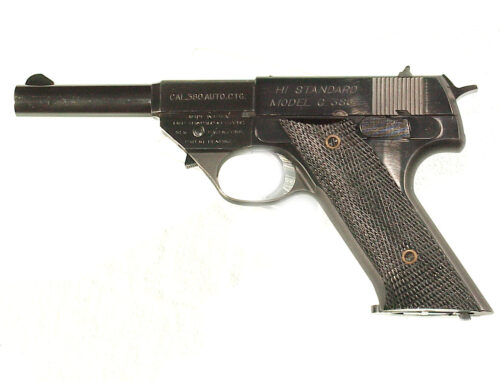
The Stock pistol looked a little like the High Standard 380 of the 1940's, but smaller. TO BE CONTINUED.
_________________________________________________It's not that I can't spell: it is that I can't type.

NOT a pocket pistol, weighs as much as an M1911, but I have a Hi-Standard G380 if the group is interested in a report. Maybe we need to start a new thread on testing the various .380s. I could kick it off with an original LCP, Beretta 1934, SIG P230 and High Standard G380.
The ENEMY is listening.
HE wants to know what YOU know.
Keep it to yourself.

I have always thought that a 380 chambered in full profile of ''target shooting configuation'' would be a useful woods pistol if ammo cost was not a consideration.Originally Posted by Outpost75

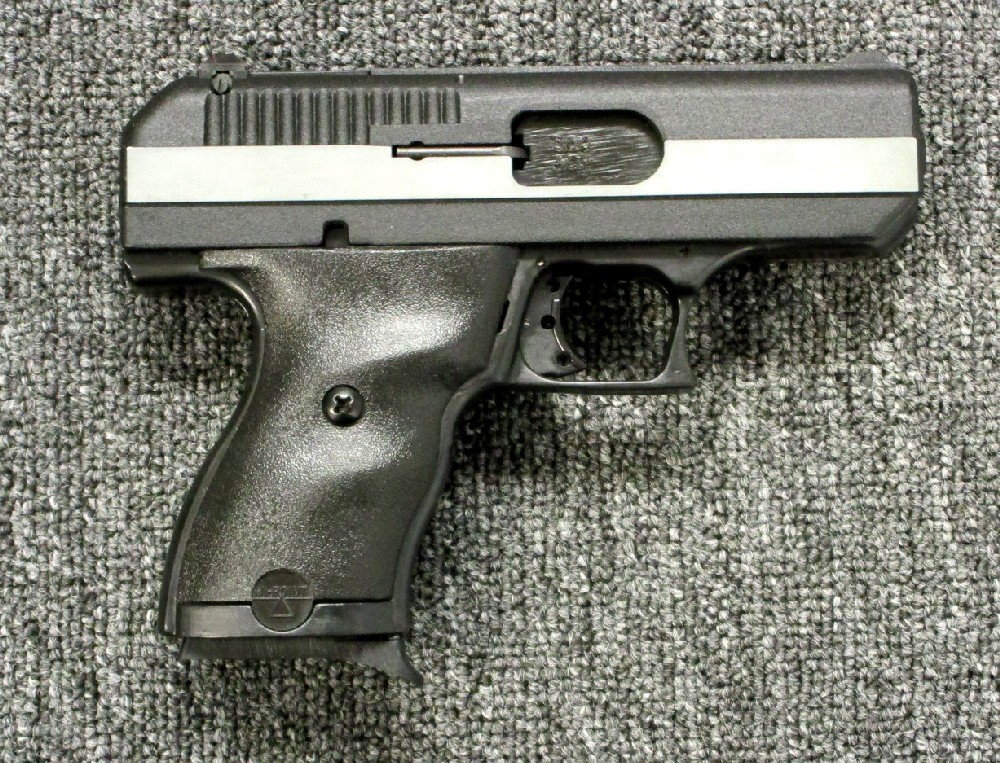
The Hi-Point CF-380 might be cheap and heavy, but has adjustable sights and shoots fantastic. So it could qualify for that role.
Currently casting and loading: .32 Auto, .380 Auto, .38 Special, 9X19, .357 Magnum, .257 Roberts, 6.5 Creedmoor, .30 WCF, .308 WCF, .45-70.
I think not. It is heavy, but is not present in 'target' configuration in my opinion. It has a HiPoint trigger also. It is a cheap blaster for those that want to pay less and still have something that goes bang. But your mileage may vary here.
To be clear I am not discussing the High Standard 380, though I would love to read about one. The Franz Stock Type II Pistol only resembles the HS in profile, but it is striker fired, not hammer fired, weighs reportedly 23 ounces, is about 4.25 inches high, 6 3/8" long and a little over inch thick, 27 millimeters, according to one site. The frame is not as steeply raked. It has an 8 shot magazine and is slightly lighter than the original Stock "Service Pistol" type I.
One thing that I get a mild enjoyment from is the "Stock" name emblazoned on the stocks of the pistol. If I can find a picture that is not copyright
stockpistol.jpg
This is the gun I was outbid on.
Last edited by rintinglen; 06-05-2026 at 10:03 PM.
_________________________________________________It's not that I can't spell: it is that I can't type.
Can you say jammamatic? I knew you could. The WPP struggled to get through two mags of ammo--14 shots with only 4 failures to eject, three failures to feed, and a 10 inch group at 7 yards, due to in part to the non-existent sights--there is only a gutter in the slide that gives absolutely no reference for elevation. However, the 15+pound trigger also helped. It was absolutely painful to shoot. I suspect the I could work on the extractor to reduce or eliminate the FTE's, but the failure to feed probably stems from a weak recoil spring. Amazing as it may seem, there does not seem to be a spring pack for the Automatic Pistol Walman Patent. Ah well, it can join the H&R waiting for me to find my "roundtoit."
_________________________________________________It's not that I can't spell: it is that I can't type.
You could always try a recoil spring from a .380 with similar internal and external diameters, maybe some Kroil and compressed air could do the trick for the extractor. If extraction is OK but ejection is the problem, which sounds likely according to your description, that sounds like a recoil spring problem, too. Ditto for failures to pick up rounds from the magazine, if the slide is recoiling too fast or slow. Entirely possible that a single spring will resolve all the problems you described.
About 35 years ago, I bought a CZ-24. It came with a plentiful supply of blarney, all about wartime provenance and excellent accuracy and smooth action. Just about everything I was told turned out to be hogwash. It was pre-War, in fact 1926. Probably never used by the Nazis--no waffenampt any where that I can discern and 9mm Kurz was not a favored cartridge--and it could not fire six shots without a jam of some sort. Well, I tried tracking down parts for it, but that never happened. Neither Jack First nor Numrich Arms--the only parts dealers I knew of then--had anything to fit it. After a few months of fruitless investigation and tinkering, it went into the safe and there it lay, forgotten until very recently.
I was perusing the catalog of Wolff Springs, looking for replacement (lighter) hammer springs for my PPK/s 32 when I happened to note a service pack for the CZ-24. That jogged my memory and for the princely sum of 17.49, I ordered the level 2 service pack and subsequently received a new recoil spring, firing pin spring, extractor spring, sear spring and magazine spring. When I went to install them, I quickly found that the extractor spring in the gun was 2 turns shorter and a few thousandths wider. Also, the Magazine spring was much weaker than the new one. I replaced everything but the sear spring, and low and behold, it worked just fine, I ran three 7 round Mags through it without strife or trouble, though the brass was barely ejecting. And that called to mind something I had read while researching the CZ-27.
The Czech version of the 9mm Kurz, 9 mm krátký, while dimensionally the same as the 380 was loaded about 10% hotter, supposedly running about 1050 FPS (320 MPS vs 300 MPS.) This is similar to the issue with the Austro Hungarian Frommer Stop 7.65, in that, the 7.65 loading was reportedly loaded to 1125 FPS (342 MPS vs 292) with a ~72 grain FMJ.
Anyway, I think I will load some 95 FMJs with the highest charge weight listed and see if that improves things.
_________________________________________________It's not that I can't spell: it is that I can't type.
Posting Permissions





| BP | Bronze Point | IMR | Improved Military Rifle | PTD | Pointed |
| BR | Bench Rest | M | Magnum | RN | Round Nose |
| BT | Boat Tail | PL | Power-Lokt | SP | Soft Point |
| C | Compressed Charge | PR | Primer | SPCL | Soft Point "Core-Lokt" |
| HP | Hollow Point | PSPCL | Pointed Soft Point "Core Lokt" | C.O.L. | Cartridge Overall Length |
| PSP | Pointed Soft Point | Spz | Spitzer Point | SBT | Spitzer Boat Tail |
| LRN | Lead Round Nose | LWC | Lead Wad Cutter | LSWC | Lead Semi Wad Cutter |
| GC | Gas Check |

 Reply With Quote