
Has anyone had any experience with Pat Marlin’s gas check maker? I bought a .30 cal die during the COVID crisis and never used it. I came across it while I was in the shop today and it got me thinking. Thanks, Bill C.

|
   
|
|


Willy Snyder
PO Box 2732
Pocatello, ID 83206

Has anyone had any experience with Pat Marlin’s gas check maker? I bought a .30 cal die during the COVID crisis and never used it. I came across it while I was in the shop today and it got me thinking. Thanks, Bill C.
Just used mine yesterday. I have the plain base model. Been working with copper sheet and pop cans lately.
Pop cans work but I going to try annealing the material next time. They turn out wrinkly straight off the can.
Store bought copper sheet makes checks that resemble factory almost. Good stuff but I have yet to tests loads made with it.
Its a process requiring some trial and error but worth the work once you figure it out. I load mousefart plain bases and simply use these checks to turn up the heat without purchasing an army of molds meant for commercial check shanks.




Yup! Mine produces pretty decent .30 cal. GCs. I started out using copper sheet cut into strips on a paper cutter but moved on to .014 aluminum when I snagged an unopened roll of 6" flashing for a buck at a yard sale. Not quite a lifetime supply but...let's see, 10 blanks from each 6" strip of flashing and 10(?) strips from each foot off the roll and...well, you get the general idea.
Bill
"I'm not often right but I've never been wrong."
Jimmy Buffett
"Scarlet Begonias"
I see the recommended .014 flashing recommended by Pat and that the 28 gauge copper sheeting is ~.014. Seems like a med to heavy duty paper cutter is used as well.
Does anyone find any difference in accuracy?




I have "Limited Experience"; having only made over 10,000 of them for .224's, .30's, 6.5mm's, 7mm's, and 8mm's. They result in as accurate boolits when using .014 Aluminum Flashing material; as did the commercial copper Gas Check's I used to use many years ago.
Would I buy another Pat Marlin Gas Chack die - Absolutely.
I use the Amerimax .014 flashing material to make Gas Checks; 4 inch wide rolls of 50 feet length. I cut my segments off the roll of 4 inch long material width a width of about 0.465 inches using a small sheet metal shear similar to the one below, the width determined by the width of the Slot cut in your Pat Marlin Dies. The shear I use to cut my 4" long x 0.465" segments is similar to that pictured below (No scissors or scissor shears for me):
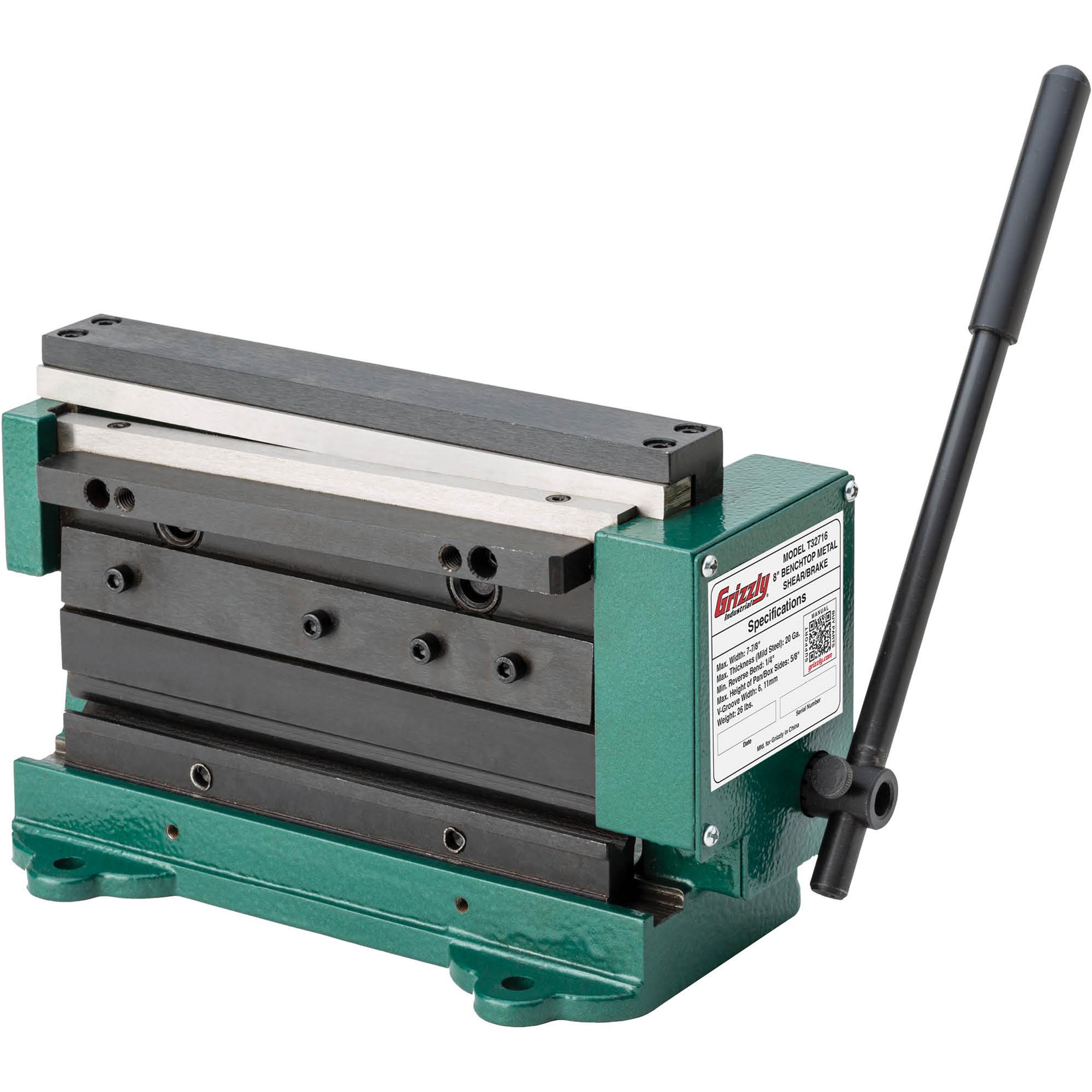
Last edited by MUSTANG; Today at 02:24 PM.
Mustang
"In the beginning... the patriot is a scarce man, and brave and hated and scorned. When his cause succeeds, the timid join him, for then it costs nothing to be a patriot." - Mark Twain.



I've used a Pat Marlins 30 caliber gas check maker for a couple of years. I use .014" thick aluminum flashing for the checks. I get my flashing in rolls from the "roofing supply" area at basically any ACE Hardware store. The Pat Marlins die set seems to be machined from mild steel, so (IMHO) it isn't really robust enough to make checks from brass or copper without undo effort. I had to modify my die by making indents in some of the components for the set screws to seat into to prevent those parts from moving under use. I got an old paper slicer from the surplus sales at a school to cut my aluminum stock with, but the small shear that MUSTANG posted above looks really interesting.
I have given serious thought to machining my own set of gas check dies. I've got basically a lifetimes supply of .017" thick brass sheet. A Pat Marlins die set is nowhere near strong enough to punch this out into checks. If I'm going to make up a gas check making die it might as well be a single stage die. The Pat Marlins is a "two stage die", where the first step punches a disc out of the sheet material, then the die is set up in a different configuration to press the discs into a gas check. I think that it would be preferable to use a die set where a finished check is made with each stroke of the press. It has also been my experience that a conventional reloading press (I use an old Rockchucker) works a bit better if the aluminum strips are lightly lubricated when punched and formed. I use the same liquid lanolin & alcohol spray that I use as reloading case lube to also lube the strips prior to forming them into checks.
I built one of the swage presses from the plans in the "Lets Build a Swage Press" thread in the site's swaging section. I believe that this press would be a better choice for making brass gas checks than my regular reloading press. Also, when I do make up a set of gas check dies I intend to make them from heat treated 4140 steel. In short - a set of Pat Marlins dies are a good starting point, and for most will suffice for 99% of bullet casters, but for a few of us they are a starting point that leads to other options.
Posting Permissions





| BP | Bronze Point | IMR | Improved Military Rifle | PTD | Pointed |
| BR | Bench Rest | M | Magnum | RN | Round Nose |
| BT | Boat Tail | PL | Power-Lokt | SP | Soft Point |
| C | Compressed Charge | PR | Primer | SPCL | Soft Point "Core-Lokt" |
| HP | Hollow Point | PSPCL | Pointed Soft Point "Core Lokt" | C.O.L. | Cartridge Overall Length |
| PSP | Pointed Soft Point | Spz | Spitzer Point | SBT | Spitzer Boat Tail |
| LRN | Lead Round Nose | LWC | Lead Wad Cutter | LSWC | Lead Semi Wad Cutter |
| GC | Gas Check |

 Reply With Quote