Reloading EverythingTitan ReloadingLee PrecisionRotoMetals2

Donate Now Goal amount for this year: 4000 USD, Received: 1570 USD (39%)
Our Annual server fund drive is going on now! This donation drive helps fund Cast Boolits for an entire year, and helps support our 2nd amendment rights! You can donate by Paypal by clicking the DONATE button. Or by Cash / Check / MO to the address below:

Willy Snyder
PO Box 2732
Pocatello, ID 83206


Page 12 of 12 FirstFirst ... 23456789101112
Results 221 to 235 of 235

Thread: Shooting Grandpas Pocket Pistols

  1. #221
    Boolit Master
    Join Date
    Jan 2009
    Location
    SRC Northwest FL
    Posts
    1,171
    Quote Originally Posted by rintinglen View Post
    About 35 years ago, I bought a CZ-24. It came with a plentiful supply of blarney, all about wartime provenance and excellent accuracy and smooth action. Just about everything I was told turned out to be hogwash. It was pre-War, in fact 1926. Probably never used by the Nazis--no waffenampt any where that I can discern and 9mm Kurz was not a favored cartridge--and it could not fire six shots without a jam of some sort. Well, I tried tracking down parts for it, but that never happened. Neither Jack First nor Numrich Arms--the only parts dealers I knew of then--had anything to fit it. After a few months of fruitless investigation and tinkering, it went into the safe and there it lay, forgotten until very recently.

    I was perusing the catalog of Wolff Springs, looking for replacement (lighter) hammer springs for my PPK/s 32 when I happened to note a service pack for the CZ-24. That jogged my memory and for the princely sum of 17.49, I ordered the level 2 service pack and subsequently received a new recoil spring, firing pin spring, extractor spring, sear spring and magazine spring. When I went to install them, I quickly found that the extractor spring in the gun was 2 turns shorter and a few thousandths wider. Also, the Magazine spring was much weaker than the new one. I replaced everything but the sear spring, and low and behold, it worked just fine, I ran three 7 round Mags through it without strife or trouble, though the brass was barely ejecting. And that called to mind something I had read while researching the CZ-27.

    The Czech version of the 9mm Kurz, 9 mm krátký, while dimensionally the same as the 380 was loaded about 10% hotter, supposedly running about 1050 FPS (320 MPS vs 300 MPS.) This is similar to the issue with the Austro Hungarian Frommer Stop 7.65, in that, the 7.65 loading was reportedly loaded to 1125 FPS (342 MPS vs 292) with a ~72 grain FMJ.

    Anyway, I think I will load some 95 FMJs with the highest charge weight listed and see if that improves things.

    It is not unusual for american 380 FMJ to be underloaded. Frommer loads in .32 ACP were supposed to loaded hot. Interesting that the Czech loads were also hot.

  2. #222
    Boolit Buddy
    Join Date
    Jul 2022
    Location
    FL Panhandle
    Posts
    310
    Quote Originally Posted by rintinglen View Post
    Ah well, it can join the H&R waiting for me to find my "roundtoit."
    I had me one of those once. Lost it; don't really know what happened to it. Now I can't seem to get anything done.

  3. #223
    Boolit Grand Master
    rintinglen's Avatar
    Join Date
    Jul 2007
    Location
    Orange, VA NOW
    Posts
    7,536
    The CZ-22, the fore runner of the CZ-24 was originally intended to be chambered in 9 mm Luger. But the hesitation lock was not up to the pressure of the larger cartridge. The thought seemed to be that if we can't go full 9mm, we can at least do a bit better than the 380. Consequently, the original Czech loadings were reportedly hotter. It seems as though my sample wants the warmer loadings, judging from the ejection pattern. Only a few feet with PMC 95 grain fmj.
    _________________________________________________It's not that I can't spell: it is that I can't type.

  4. #224
    Boolit Buddy LouisianaMan's Avatar
    Join Date
    May 2009
    Location
    Baton Rouge, LA
    Posts
    391
    Quote Originally Posted by rintinglen View Post
    The CZ-22, the fore runner of the CZ-24 was originally intended to be chambered in 9 mm Luger. But the hesitation lock was not up to the pressure of the larger cartridge. The thought seemed to be that if we can't go full 9mm, we can at least do a bit better than the 380. Consequently, the original Czech loadings were reportedly hotter. It seems as though my sample wants the warmer loadings, judging from the ejection pattern. Only a few feet with PMC 95 grain fmj.
    Interestingly, that was exactly the niche already filled by the 9mm Browning Long, although it was designed 20 years previously for the FN Mod. 1903 and its Swedish-license produced m/07 Husqvarna, thus prior to the 1908 appearance of both the 9mm Luger and the .380 ACP/ 9mm Browning. Semi-rimmed and perhaps looked at askance by some for that reason, yet the .32 ACP/ 7.65 Browning was highly regarded despite the same semi-rim configuration.

    The 9mmBL specs were 108g bullet @ MV 1114 fps in Swedish service, although I've seen that cited elsewhere as 1075 fps. Swedish MILSURP ammo of c. 1940s-50s vintage and Norma c. 1970s production chrono'ed c. 1175-1225 from my m/07, and a couple of pulled bullets weighed 110g. Of course, here in south Louisiana the elevation is barely above sea level, and the temp and humidity were both higher than I'd expect was the case in Swedish testing more than a century ago.

    Quite likely that the Czech pistol designs weren't readily compatible with the 28mm COL of the 9mmBL vs. the 25mm COL of the 9mm Browning "Court" and 7.65mm Browning cartridges, and the Czechs found it more practical simply to soup up the shorter cartridges.

  5. #225
    Boolit Grand Master
    rintinglen's Avatar
    Join Date
    Jul 2007
    Location
    Orange, VA NOW
    Posts
    7,536
    The 9mmm Browning Long was an unfortunate casualty of the 9mm wars. 9mm Largo, 9 mm Mauser, 9 mm kurz, 9 mm Steyr, 9 mm Glisenti and I'm sure one or two others that I am forgetting all were chambered in various largely forgotten service pistols. But most of them were for locked breech weapons, which were more costly and complex to make than the simpler, cheaper blow-back pistols. The 9mm BL is about the most powerful cartridge suitable for use in a blow-back weapon, at least one of reasonable weight and size, the Hi-point pistols not withstanding.

    It was somewhat surprising that the 9 MM Browning Long did not have a bigger impact than it did. As best as I recall, only FN, Webley, and La France ever made pistols in this caliber. You'd have thought the cheaper cost per unit would have tempted at least a few of the smaller countries seeking to arm their armies and police. But outside of Sweden and Norway, there were only a few Police purchases. Imperial Russian Police had a few thousand from FN, the Swedes made nearly 95,000 for their army, some Turkish Gendarmes bought a few. Belgium had a few, privately purchased by officers desiring something more potent than the 7.65 1900's. Webley sold a few thousand to South African and Australian Police, but in the main, the 9 BL dropped in the pond without a splash.

    With its ~110 grain bullets, it approximated in power the similar 38 Special 110 grain +p loads that would arrive 60 odd years later, though FMJ vs JHP is a bit of a loser. Still, it is not that far from the 9 mm Luger. I suspect the rise of the SMG kicked the 9 BL into the discard. The semi-rim was disadvantageous to designing a cheap, reliable burp gun.
    Last edited by rintinglen; 06-13-2026 at 01:09 PM.
    _________________________________________________It's not that I can't spell: it is that I can't type.

  6. #226
    Boolit Buddy LouisianaMan's Avatar
    Join Date
    May 2009
    Location
    Baton Rouge, LA
    Posts
    391
    Quote Originally Posted by rintinglen View Post
    The 9mmm Browning Long was an unfortunate casualty of the 9mm wars. 9mm Largo, 9 mm Mauser, 9 mm kurz, 9 mm Steyr, 9 mm Glisenti and I'm sure one or two others that I am forgetting all were chambered in various largely forgotten service pistols. But most of them were for locked breech weapons, which were more costly and complex to make than the simpler, cheaper blow-back pistols. The 9mm BL is about the most powerful cartridge suitable for use in a blow-back weapon, at least one of reasonable weight and size, the Hi-point pistols not withstanding.

    It was somewhat surprising that the 9 MM Browning Long did not have a bigger impact than it did. As best as I recall, only FN, Webley, and La France ever made pistols in this caliber. You'd have thought the cheaper cost per unit would have tempted at least a few of the smaller countries seeking to arm their armies and police. But outside of Sweden and Norway, there were only a few Police purchases. Imperial Russian Police had a few thousand from FN, the Swedes made nearly 95,000 for their army, some Turkish Gendarmes bought a few. Belgium had a few, privately purchased by officers desiring something more potent than the 7.65 1900's. Webley sold a few thousand to South Africa and Australia Police, but in the main, the 9 BL dropped in the pond without a splash.

    With its ~110 grain bullets, it approximated in power the similar 38 Special 110 grain +p loads that would arrive 60 odd years later, though FMJ vs JHP is a bit of a loser. Still, it is not that far from the 9 mm Luger. I suspect the rise of the SMG kicked the 9 BL into the discard. The semi-rim was disadvantageous to designing a cheap, reliable burp gun.
    Excellent summary analysis! I have no proof to offer, but suspect that the blowback system's self-limiting characteristics played an important role in the 9mmBL's lack of success: difficulty of slide retraction and relative violence of recoil, aka "felt recoil." Can't blame JMB for failing to figure out every possible angle in the first few years of auto pistol design, of course, but even milling a "grippier" pattern in the slide grooves would've helped a bit with slide retraction effort against a strong recoil spring. (I also note that Beretta's 80-series guns have had much the same shortcomings, although the external hammer allows you to cock the hammer manually and thereby reduce the slide retraction effort markedly).

    And yes, a 110g JHP handloaded @ 1100-1125 gives .38 SPL +P+ performance to the 9mmBL. Load a Remingchester 110g SJHP or Hornady 110g XTP-HP to Swedish military velocities of c. 1200, and it fully equals the .357 Magnum 110g loading. Easy to achieve analogous results with 125g SJHP and 135g GDHP, too, but I'll call it a day with this thread drift!!

    Looking forward to more about the old pocket pistols!

  7. #227
    Boolit Grand Master
    rintinglen's Avatar
    Join Date
    Jul 2007
    Location
    Orange, VA NOW
    Posts
    7,536

    The CZ-24, at last

    With their Declaration of Independence formally recognized in 1920 in the Treaty of St. Germain, the Czechs, and Slovaks under Tomáš Garrigue Masaryk, the George Washington of his country, set out to build a nation. They found themselves in need of just about everything. They had to create or adopt currency, laws and courts, flags, taxes and a host of other requirements, especially an army. Because, as I have previously alluded to the, Balkans had a residue of animosity left over from the Balkan Wars that had preceded the Great war. (Not to mention the fighting that had gone on in that area during WW I.) The newly created countries had ample reason to foresee the need for strong armies. Additionally, there were multiple instances of ethnic minorities that didn't like their new homeland. Bohemian Germans wanted to be part of Austria, not Czechoslovakia. Serbs, and Croats in Yugoslavia made a fair semblance of Chicago style gang warfare, and the Ustaše and IMRO were stirring up trouble in Yugoslavia, Bulgaria and Greece, eventually spilling over into France with the assassination of King Alexander I in Marseille. Arms and an army were viewed as essentials.

    The problem of lack of standardization was perceived as a major logistical obstacle. You had left over German, Austrian, Russian and French armaments, all using different cartridges. Antique pistols from the last century, mingled with pocket pistols, Austrian and Hungarian service pistols of various calibers. The need to standardize was swiftly recognized. Fortunately, the Bohemian section of the nation was fairly industrialized and the Czechs were able to take an artillery factory and a textile concern and rapidly convert them to making and converting arms. Zbrojovka Brno swiftly became a power house, building artillery, machineguns and rifles. They were also initially tasked with the development of a new pistol. Well, that trick didn't work.

    Despite having the services of Václav Holek, one of the premier firearms designers, the resulting Praga Pistol was a bust. The firearms were perhaps not badly designed, but were badly made, with a lack of interchangeable parts that required extensive hand fitting. Plagued with parts breakage and reliability issues, by 1921 it was back to the drawing board. Josef Nickl, formerly working at Mauser had come up with a rotating barrel design initially for 9 mm Luger, but the version bought by The Czechs was a smaller blowback Pistol in which they intended to use the 9 mm Kurz (380) cartridge.
    Last edited by rintinglen; 06-15-2026 at 08:17 AM.
    _________________________________________________It's not that I can't spell: it is that I can't type.

  8. #228
    Boolit Master
    Join Date
    Jan 2009
    Location
    SRC Northwest FL
    Posts
    1,171
    Quote Originally Posted by LouisianaMan View Post
    Excellent summary analysis! I have no proof to offer, but suspect that the blowback system's self-limiting characteristics played an important role in the 9mmBL's lack of success: difficulty of slide retraction and relative violence of recoil, aka "felt recoil." Can't blame JMB for failing to figure out every possible angle in the first few years of auto pistol design, of course, but even milling a "grippier" pattern in the slide grooves would've helped a bit with slide retraction effort against a strong recoil spring. (I also note that Beretta's 80-series guns have had much the same shortcomings, although the external hammer allows you to cock the hammer manually and thereby reduce the slide retraction effort markedly).

    And yes, a 110g JHP handloaded @ 1100-1125 gives .38 SPL +P+ performance to the 9mmBL. Load a Remingchester 110g SJHP or Hornady 110g XTP-HP to Swedish military velocities of c. 1200, and it fully equals the .357 Magnum 110g loading. Easy to achieve analogous results with 125g SJHP and 135g GDHP, too, but I'll call it a day with this thread drift!!

    Looking forward to more about the old pocket pistols!
    The spanish continued to make heavy blow back pistols through WWII for a german order; it was the astra 600 in 9mm. HiPoint is a current successful gun maker that only uses blowback up to 10 mm for pistols and carbines. The slides and guns are heavy. The reason, making product that sells for less than anybody else's product.

  9. #229
    Boolit Grand Master
    rintinglen's Avatar
    Join Date
    Jul 2007
    Location
    Orange, VA NOW
    Posts
    7,536
    Indeed, the Astra 400 was also a blowback, but the comments concerning slide retraction difficulties were on point. Most pc carbines and submachineguns were blowback, but they were/are a lot heavier and outside the parameter of something you might drop in your pocket.
    _________________________________________________It's not that I can't spell: it is that I can't type.

  10. #230
    Boolit Master
    Join Date
    Jan 2016
    Posts
    1,183
    GONRA's CZ-22's are rotating barrel locked breech.

  11. #231
    Boolit Grand Master
    rintinglen's Avatar
    Join Date
    Jul 2007
    Location
    Orange, VA NOW
    Posts
    7,536

    CZ-24, continued

    The Praga turning into a bust, the Czechs turned to the Mauser firm for a little help. They bought a bunch of tooling and machinery, primarily for making the Gewehr 98 Mauser, which, when slightly modified for easier production, became the VZ-24 8mm Rifle. They also got the design of a pistol that Josef Nickl had produced during the War. Ian McCallum has a piece on Forgotten weapons concerning the M-1916-22 9mm Luger pistol, which is very informative about these prototypes. But the Czechs were of a mind to get a more compact weapon, so the 9mm Luger M-22 went on a diet and and was rechambered in to 9 mm Nickl, which was reportedly slightly hotter than the regular 380/9 mm Kurz cartridge, yet had the same basic dimensions save for a rebated rim.

    When they began tooling up for what would be the VZ-22, the Czechs foresaw that a non-standard cartridge might cause difficulties in the event they needed to buy ammo from a foreign manufacturer. Accordingly, the decision was made fairly early on to chamber and fit their new pistol for for the standard dimension ammo, not the rebated rim Nickl cartridge. Now there seems to be some disagreement on whether or not the hotter charge of the Nickl cartridge was used, at least initially, in the VZ 22 and CZ-24 cartridges. Based on the ejection and function of my example, I am inclined to buy the hotter charge theory. Also, the only VZ-22 I have been able to examine is marked "9 mm N" on the slide.

    Whatever the case, the production of the VZ-22 at Zbrojovka Brno (ZB) was not a smashing success. This too had problems with interchangeable parts and required too much hand fitting to be acceptable as a general issue service pistol. They set out to find another company to build the pistols, relieving ZB of the task so they could concentrate on rifles, machine guns and heavier ordnance. Czech Army Ordnance types went to the relatively small manufacturer, Česká Zbrojovka, to see if they would be better able to resolve the problem of interchangeable parts. To win the contract, CZ took 10 of their Model 1921 25 ACP pistols, disassembled them, mixed the parts up and then reassembled them under the eyes of the arms commissioners. Each pistol was then loaded and fired with two magazines each. When the last shot was fired, CZ had the contract.

    When CZ examined the VZ 22, the design engineer Anatoly Petrovič Zaljubovský and his proteges quickly discovered a number of needless complications. They drafted a letter recommending changes to the trigger mechanism, frame, barrel and magazine safety to ease production and altered the grip to eliminate the complaints made about the VZ 22's right angle grip. These were adopted and the CZ (or VZ) 24 Pistol was authorized and production began, with the first deliveries being completed late in 1925, with series production beginning in 1926. Ultimately, some where in the vicinity of 196,000 pistols would be produced before Hitler would bluff France and England into allowing him to take over the Czech Republic. Most of these pistols would end up being used to arm Luftwaffe, Kreigsmarine and other rear area troops, due to the 9mm Kurz not being a regular supply item like the 9mm Luger or 7.65 x 17 (32 ACP). A few were assembled after the war but the simpler blowback CZ 27 would supplant it until the CZ 50 Walther PPK semi-clones came out in the early 1950's.

    The CZ 24 is a single action, hesitation lock (some say locked breech), rotating barrel, 8 shot, box magazine fed, semi auto pistol. It is ~ 6 3/16's inches long, ~ 4 13/16ths" tall, and at its widest point measures ~1.06 inches. Unlike the earlier VZ 22, the CZ 24 has no caliber markings, but it does chamber 380. The barrel is ~3 9/16" long Mine was proofed in 1926. It weighs about 23 3/4 ounces on my ancient postal scale. It has replacement CZ-27 Bakelite grips but many, perhaps most have smooth walnut grips. It is marked "1 PUV 1205" which according to chart I saw indicates that this gun was issued to the 1st Carriage (car, truck?) Attack Battalion. What that was I do not know--I'm kinda guessing that maybe google translate was not quite up to snuff. Praporu útočného vozy.

    Mine has a light, albeit somewhat squishy, trigger--at a guess a bit over 4 pounds. It has a safety like those on the Mauser 1910 and CZ27 pistols as well as a magazine safety of relatively simple design. The magazine is retained by a typical, heel magazine catch, mine has a D ring for a lanyard attachment on the mag catch, though not all pistols I have seen pictured have these. It seems as though some of them had the D ring either left off, or removed, probably to prevent partial ejection of a loaded magazine, with the consequent failure to feed. The sights are just about identical to those on the CZ 27--no big surprise, The front has a pyramid shape, rising from a base of about 3/32's to a flat topped peak of about a sixteenth of an inch, the rear sight has a v-notch. It reminds me of the sights on the Walther P-38 pistol.
    Last edited by rintinglen; 06-14-2026 at 06:33 PM.
    _________________________________________________It's not that I can't spell: it is that I can't type.

  12. #232
    Boolit Grand Master
    rintinglen's Avatar
    Join Date
    Jul 2007
    Location
    Orange, VA NOW
    Posts
    7,536
    Well, it was hot, too hot for this old boy to be standing out in a shadeless range, but I did pop off a couple of mags from each of the 4 pistols I brought on the pistol range, under the awning.

    First up, the CZ 24: Didn't like my 356-242 92 grain lead boolits very much. They were too lightly loaded to work the action reliably, ejecting barely 2 feet away, and once failing to eject. I'll bump up the load and use some 95 grain FMJ's that I bought. I got a group of about 5 inches at 25 yards from a braced barricade position.

    2nd, The Tanfoglio GT-380: the heavier trigger more or less offset the very good sights. It shot well, no bobbles or goofs in 14 rds, but the group was about the same as that of the CZ, though a bit high and right.

    3rd, the Ortgies 7.65: had a couple of light strikes--it is waiting on a Wolff spring kit. Put 11of 13 in about a 4 x 5inch group, but a couple of fliers opened things up about 2 inches.

    4th, The 7.65 Kommer Number 4: this would be the rarest gun I own, and the PMC was too weak to make it run. It shot about 8 inches high, albeit well centered. I had a couple of misfeeds when the slide didn't quite have enough umph to drive the cartridge up the feed ramp.

    I am going to redline some 380 stuff for the CZ-24 and the Kommer will get the S&B stuff when it gets here.
    Last edited by rintinglen; 06-17-2026 at 08:32 PM.
    _________________________________________________It's not that I can't spell: it is that I can't type.

  13. #233
    Boolit Grand Master
    rintinglen's Avatar
    Join Date
    Jul 2007
    Location
    Orange, VA NOW
    Posts
    7,536
    Well. things went pretty well today. I can see that I'll need to cast up some more 35-100L boolits for my cz-24. Loaded to an OAL of ~.970 over 3.4 grains of WW231, it ejected more energetically and was quite accurate too, with 2 1/2 " groups at 13 yards ( I thought that the marker said 15 on the wall.) I was shooting indoors--the sun was pretty brutal and the humidity was no bueno out side. I had only loaded 20 rounds to test the function, but I think the test was a success.

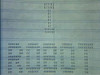
    The 7.65 S&B ran well in the Ortgies. That trigger is really nice, in fact, too nice for a SA gun to carry in a pocket. Definitely need a holster for this one.
    _________________________________________________It's not that I can't spell: it is that I can't type.

  14. #234
    Boolit Grand Master
    rintinglen's Avatar
    Join Date
    Jul 2007
    Location
    Orange, VA NOW
    Posts
    7,536

    The Kommer Model 4

    There is darned little information on this gun, save for an article by Ed Buffalo and his partner,Dr. Klein in his excellent series "Unblinking Eye." Even he reports that there is little information available. But here goes, borrowing liberally from Mr. Buffalo. A machinist named Theodor Kommer opened a Machine shop in Zella-Melis II in 1889. Herr Kommer was about 23 at the time and his concern, the Theodor Kommer Waffenfabrik, initially made free-style, target pistols. Though not mentioned by Buffalo, a posterbon the 98K website reported that. during the first World War, The Kommer Concern made Machine tools and parts, supporting the war effort.

    Regardless, after the war, The Kommer firm needed to find new products to manufacture and in ~1920, they marketed a 9 shot, poor man's, simplified copy of the Fn1905 6.35 Browning pistol which deleted the grip safety, changed the trigger bar, and extensively modified the disconnector mechanism.

    A few years later, they began to make 6.35 mm Model 2 (7 shot) and Model 3 (9 shot) variants with improved (slightly) sights and a further modified disconnector system. They sold an unknown number of these, unknown because a large percentage were made with no serial numbers and the company records were burned after WW II for heat by one of the wives of the Kommer concern's officers. Less than 1500 of the model 1 pistols appear to have been made (the highest observed extant serial number is 1330, but unnumbered examples are fairly common.) The model 2 and 3 guns were seemingly numbered together, with highest numbers being in the 16,000's. Probably, the total production was less than 20,000.

    Enter the Model 4

    In 1936, the Kommer factory began to produce a military caliber pistol in the more powerful 7.65 x 17 caliber. Like it's little brothers, the Model 4 was a derivative of a John Browning design, in this case the FN 1910. The barrel mounting system is virtually identical, but the slide ring (barrel bushing in 1911 parlance) screws in place, rather than using a bayonet-type latch. The grip safety is dispensed with and the stirrup style trigger bar is replaced by a single flat bar, similar to many of the Ruby pistols. It is a striker fired pistol, ~ 20 ounces, and vitually identical dimentionally to the FN 1910. It is almost a sixteenth of an inch longer, at 6" plus, about 4 inches tall and about a 16th of an inch thinner at 15/16ths". They weigh with in a half ounce of one another, right at 20 ounces. Mine has a 7 shot magazine, but I saw a post that said his was an 8 shot. Mine was a Gunsmith's Special, requiring a replacement recoil spring and a striker spring, which are notreadily available, however, I was able to fit a Mauser HSc recoil pring and a striker spring that I found in my box o' stuff and got it to shoot. I am waiting on a new magazine from 3K in the hopes that will make everything alright. We shall see.

    Now how many were made is open to question, over at Jan Still's Luger forum there is a fellow who is collecting serial number information and he is of the opinion that the Models 2,3 and 4 are serial numbered together, a la Webley and some other manufacturers. The lowest known Serial Number is 5621, with an asterisk while the highest known is 19587, but that is poorly documented, the highest for suresies is 17405. Now the reason for the asterisk is that the 5621 gun is not only the lowest, but it was one of the last guns . It is a presentation piece, made, or at least engraved, as a gift to a high ranking SS Oficer in 1940, which was the last year of production of the Kommer pistols. The next lowest numbered gun is in the 8,000 range, with most examples in the 8,000, 11000-12000, and 16000 ranges. It is estimated that absolutely not more than 20,000 have been made, with less than 5,000 also possible. If the data suggesting that all three models were serial numbered together, the total could be much less. My personal guess is that the production of the model 4 started cerca 5,000 and that batches were made, with most made,or at least proofed in 1940, as the majority have the Nazi Eagle over N proof mark, use of which started in 1940, replacing the old crown over N proof.
    Last edited by rintinglen; Yesterday at 04:10 PM.
    _________________________________________________It's not that I can't spell: it is that I can't type.

  15. #235
    Boolit Grand Master
    FergusonTO35's Avatar
    Join Date
    May 2012
    Location
    Boonesborough, KY
    Posts
    8,815
    Interestingly, my favorite 9mm Luger reloads all basically duplicate the 9mm Browning Long: .357-.358 boolit with around 240 foot pounds of energy!
    Currently casting and loading: .32 Auto, .380 Auto, .38 Special, 9X19, .357 Magnum, .257 Roberts, 6.5 Creedmoor, .30 WCF, .308 WCF, .45-70.

Page 12 of 12 FirstFirst ... 23456789101112

Posting Permissions

  • You may not post new threads
  • You may not post replies
  • You may not post attachments
  • You may not edit your posts
  •  
Abbreviations used in Reloading

BP Bronze Point IMR Improved Military Rifle PTD Pointed
BR Bench Rest M Magnum RN Round Nose
BT Boat Tail PL Power-Lokt SP Soft Point
C Compressed Charge PR Primer SPCL Soft Point "Core-Lokt"
HP Hollow Point PSPCL Pointed Soft Point "Core Lokt" C.O.L. Cartridge Overall Length
PSP Pointed Soft Point Spz Spitzer Point SBT Spitzer Boat Tail
LRN Lead Round Nose LWC Lead Wad Cutter LSWC Lead Semi Wad Cutter
GC Gas Check