
Contemplating purchasing a nice 303 Brit.
Are these good cast shooters?
What size do you cast for these?

|
   

|
|


Willy Snyder
PO Box 2732
Pocatello, ID 83206



Contemplating purchasing a nice 303 Brit.
Are these good cast shooters?
What size do you cast for these?
Failure is not an Option
Wait til she arrives and slug the bore before deciding on a mold. I have a Martini Enfield that slugs .311", an Eddystone P14 that slugs .312", a No 3 MkI that slugs .315" and a Winchester 95 that slugs .313". Makes Life interesting loading cast for my harem, so I only load cast for the Martini. Shoots decent with 180gr but really shines with 220gr.
Rights, and Privileges, are not synonymous. We have the Right to Bear Arms. As soon as the Government mandates firearm registration, and permiting, then that Right becomes a Privilege, and may be taken away at our Master's discretion.
I have multiple 303’s. I use Lyman 314299 sized and lubed with a .315” die which barely touches the sides of the boolit. .314” works just well. #2 alloy. 50/50 lube. I don’t expand the case mouth, but do inside chamfer the case mouth. Oal length is 3.08”. Different rifles may like different powders; some of mine like multiple powders. Unique, BE86, 2200, IMR4198, 2400, IMR4895, 7383 are used. #1 goal is accuracy. #2 goal is velocities in the teens.
Finally, keep brass separated for each rifle and neck size after the first firing…brass will last longer.
PS. My smallest bore is around .312. Largest .316”. I use same size boolit in every one wth fine accuracy.
Last edited by Whole Bunches; 01-31-2026 at 10:32 PM.


My Enfield in 303 also does great with the 314299GC. Also loves my old SAECO #44 mold which is a 175 grain plain-based spire point. The SAECO bullet is one that I size to 0.311 then powder coat to 0.313. Be sure to slug the bore as mentioned above. Enfields do very well with cast as long as you find the correct size to shoot well in your bore.
Hick: Iron sights!
I second the Lyman 314299 and the Lee 185grain bullet also works well if the bore is tight enough.
ukrifleman


There are several variations of bore size and as others have said slug your bore before committing to a mould. There is also at lease two variations in chambering, early No.1Mk1 rifles were throated for MK6 ammunition (215gn Copronickle boolit) and Mk7 ammunition (174gn Spitzer boolit). Cast Bullet Engineering made me a composite mould that throws a 190gn to suit Mk7 chambers and a 220gn for rifles with MK6 throating.
Rifles No1 Mk1 (1900, 1901, 1902)

Hold Still Varmint; while I plugs Yer!


It has a good case for lead. the only thing I like better is the .30-40 Krag that is it’s twin with what? a skosh longer neck. Maybe two skoshes!
I too use a 314299 with 2500+ lube and a Hornady gas check. I use SR4759 but I sense I need to change that.

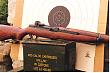
As it's been said already , sizing is very important , the rifle will tell you what it needs . As a kid I had one that liked .311" . Later in life I got five more and they ranged from .312" up to .319" . Truth is , most of them could take larger because the chamber was so HUGE . Minimal case sizing helped for alignment so I didn't need even larger bullets .
Jack
Buy it cheap and stack it deep , you may need it !
Black Rifles Matter


"303 Brit"
"Brit" meaning rifle and cartridge or just the cartridge?
Larry Gibson
“Deficient observation is merely a form of ignorance and responsible for the many morbid notions and foolish ideas prevailing.”
― Nikola Tesla
Probably just differentiating between .303 British & .303 Savage, which has nothing in common but the name.
Rifle, I believe it is a #4 MK1 in great condition.Originally Posted by Larry Gibson

Bore is excellent.
However, all the talk of the bores varying so much, I am starting to rethink the purchase.
I don't want to buy anymore molds.
Also, I have several rifles that shoot cast excellent already.
This would be more of a I don't already have one, kind of buy that I don't need.
Failure is not an Option
My No.4 MK1 with 192gn boolit and 28.5gn of 3031

Hold Still Varmint; while I plugs Yer!
If it's a No4 MkI with a 5 groove barrel in excellent condition I wouldn't hesitate to buy it. I would bet a .314 sized bullet should shoot quite well. It's the over size 2 groove barrels that don't handle cast very well. The grooves in many are quite narrow and very shallow. However, 5 groove barrels do cast very well.
Larry Gibson
“Deficient observation is merely a form of ignorance and responsible for the many morbid notions and foolish ideas prevailing.”
― Nikola Tesla

Paper patch, maybe?
The solid soft lead bullet is undoubtably the best and most satisfactory expanding bullet that has ever been designed. It invariably mushrooms perfectly, and never breaks up. With the metal base that is essential for velocities of 2000 f.s. and upwards to protect the naked base, these metal-based soft lead bullets are splendid.
John Taylor - "African Rifles and Cartridges"
Forget everything you know about loading jacketed bullets. This is a whole new ball game!

Don't waste your time slugging the bore. Just use the largest diameter bullet that will chamber in a loaded round and never look back. Saves a lot of time and headache. Just start by planning for the biggest bullet and adjust down if needed to get the round to chamber.
Good Luck,
Rick
In my opinion (with rifles such as these), it isn't the bore you need to match the bullet to, it's the ball seat/lede that the loaded bullet is chambered into. The tighter/closer the bullet fits into this portion of the barrel at the moment of firing, the much less opportunity for gas to escape past the bullet prior to it obdurating after firing to seal the bore and all the resultant havoc on bullets as well as the bore, and how well the rifle groups.
Whatever the actual size of the bore, the bullet will find a way to squeeze itself down to fit those dimensions once it gets there after the bright flash appears at it's tail when you pull the trigger...
For a different example on chamber and bore variances, I have my Grandfather's 1895 Winchester in 30 U.S. Casting the bore says it's a bit large for a .30 caliber - but the ball seat and lede along with the first inches of the bore look like they should belong to a Lee Enfield .303 British. I couldn't find a jacketed bullet that would group for anything - heavy cast bullets properly fitting the ball seate/lede cut the groups down to somewhere around 2.5" at 100 yards at hunting velocities.
I believe the problem with grouping wasn't the bore size, it was the ball seat, lede, and first inch or two of rifling that was the problem.
With that experience in mind: given all the money I pour out the end of my 1950 Long Branch in cast bullets (as well as Privi Partizan's various flavors of Mk VII replicas), I decided that the cost of a custom mould from Tom at Accurate Moulds was cheap like borscht - even if just calculating the time it saves me.
If you don't choose to buy a new mould, powder coating is one way to increase the size if that's what you feel a need to do. No new moulds required to experiment with that way of increasing cast bullet size.

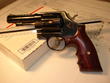
I got Lucky ... 1942 datd , Birmingham Small Arms (BSA) ...
Serial number 490 - No 4 MK I - 5 groove barrel that measures .311" ...
I can use bullets sized .312"
At the time the only boolit mould I could find was a Lee C312-185-1R ...
Sized to .312 " and they work / shoot great !
I was so expecting a .314"+ but ,,, I got lucky !
The rifles from the BSA factory seem better made .
Certified Cajun
Proud Member of The Basket of Deplorables
" Let's Go Brandon !"
I have no exact measurements for the groove/bore diameter of my Long Branch - I never took advantage of the CBA member that had the special V-blocks for taking those measurements from a slug of the barrel while he was doing that. A friend working at a technical college said they had an optical comparator amongst their machinists' equipment that would do that for me. He never got around to doing that...
I would be curious about the dimensions, but I'm far more concerned with a bullet that tightly fits the dimensions of the ball seat and lede. Everything further down the barrel after that will fit just fine once the bullet gets there.


Try the 'muzzle fit' test. Put the boolit nose first into the muzzle; if it drops in, too small. If it fits just right, you are borderline. if it doesn't go past the nose (depending on profile) it should be a good starting point. Others can give you more accurate advice. Slugging the bore is always the best way to start.
Lead Forever!
The 2nd amendment was never intended to allow private citizens to 'keep and bear arms.' If it had, there would have been wording such as 'the right of the People to keep and bear arms shall not be infringed. -Ken Konecki, July 27, 1992
John Galt was here.
"Politics is the art of postponing an answer until it is no longer relevant". (From the movie 'Red Tails')
Thanks,
This was my thought, as I wouldn't be able to slug the bore before buying the rifle.
Failure is not an Option
Posting Permissions





| BP | Bronze Point | IMR | Improved Military Rifle | PTD | Pointed |
| BR | Bench Rest | M | Magnum | RN | Round Nose |
| BT | Boat Tail | PL | Power-Lokt | SP | Soft Point |
| C | Compressed Charge | PR | Primer | SPCL | Soft Point "Core-Lokt" |
| HP | Hollow Point | PSPCL | Pointed Soft Point "Core Lokt" | C.O.L. | Cartridge Overall Length |
| PSP | Pointed Soft Point | Spz | Spitzer Point | SBT | Spitzer Boat Tail |
| LRN | Lead Round Nose | LWC | Lead Wad Cutter | LSWC | Lead Semi Wad Cutter |
| GC | Gas Check |

 Reply With Quote
